

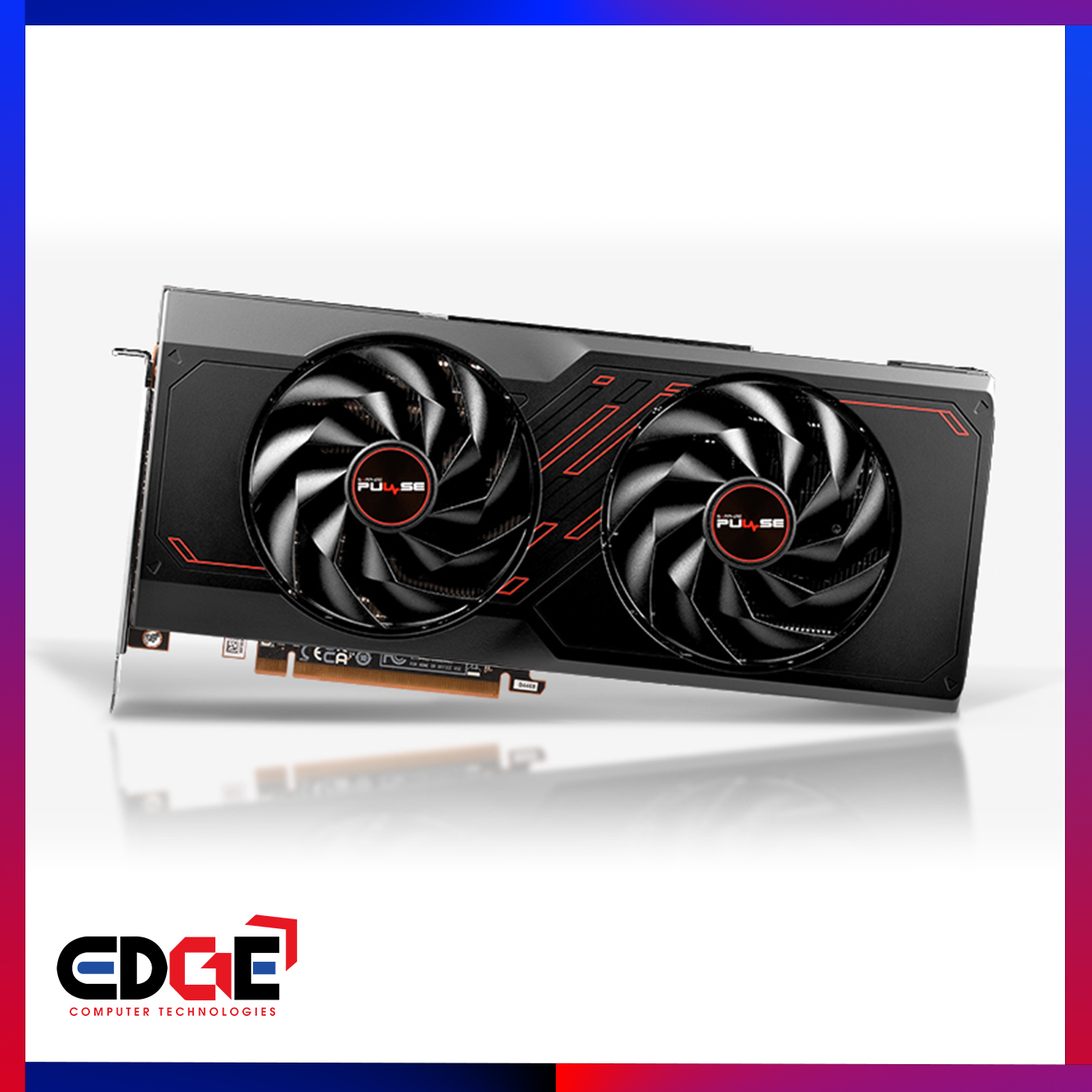
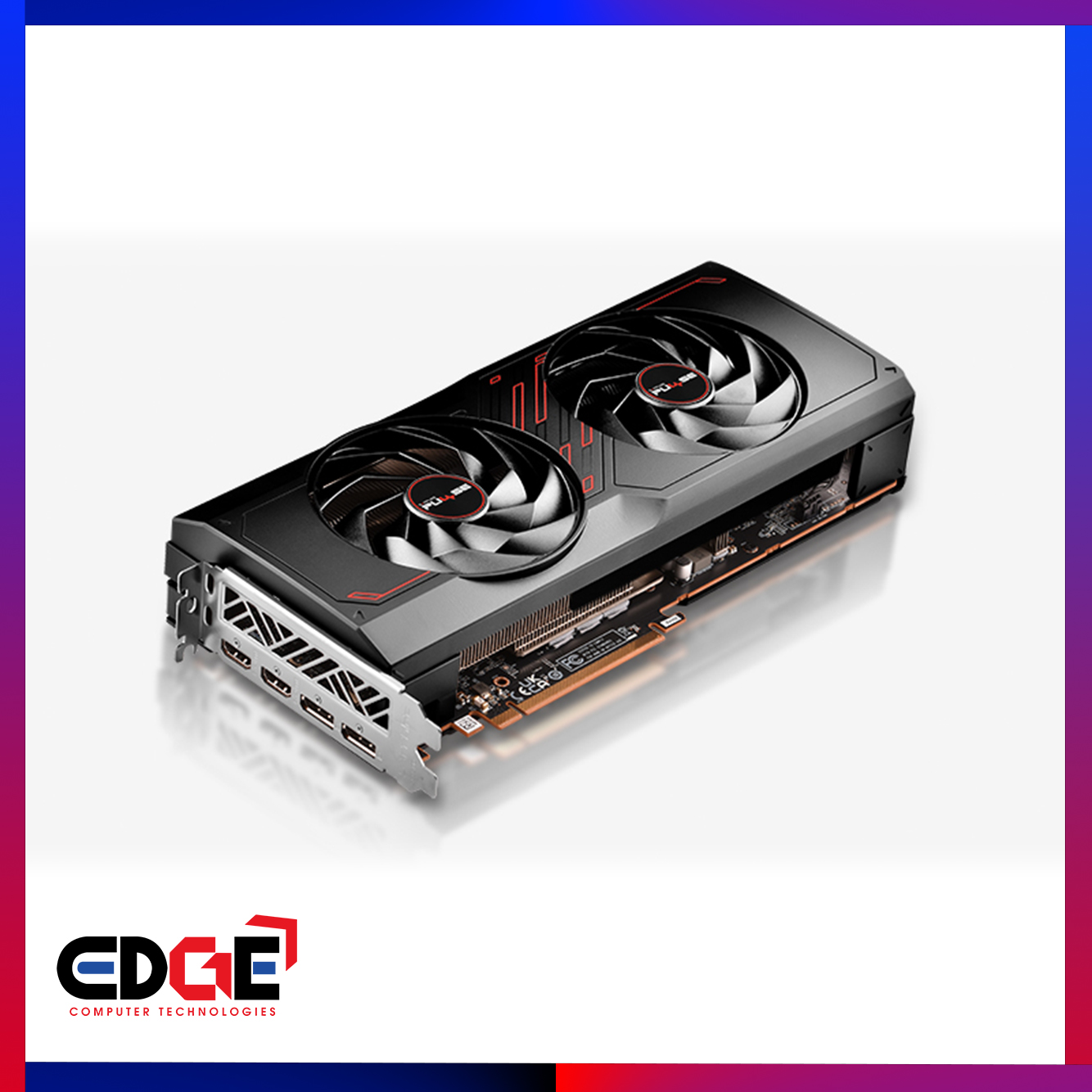

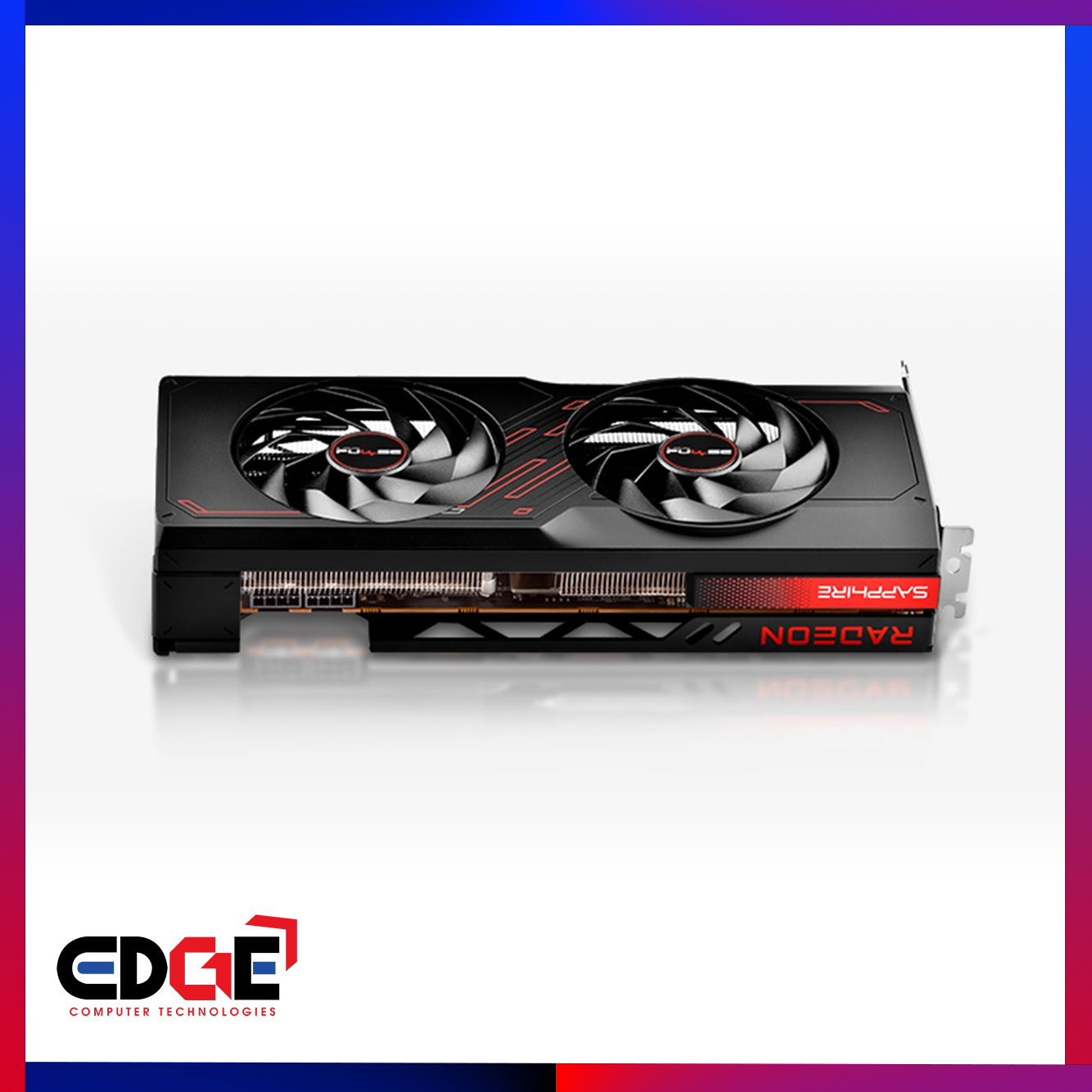
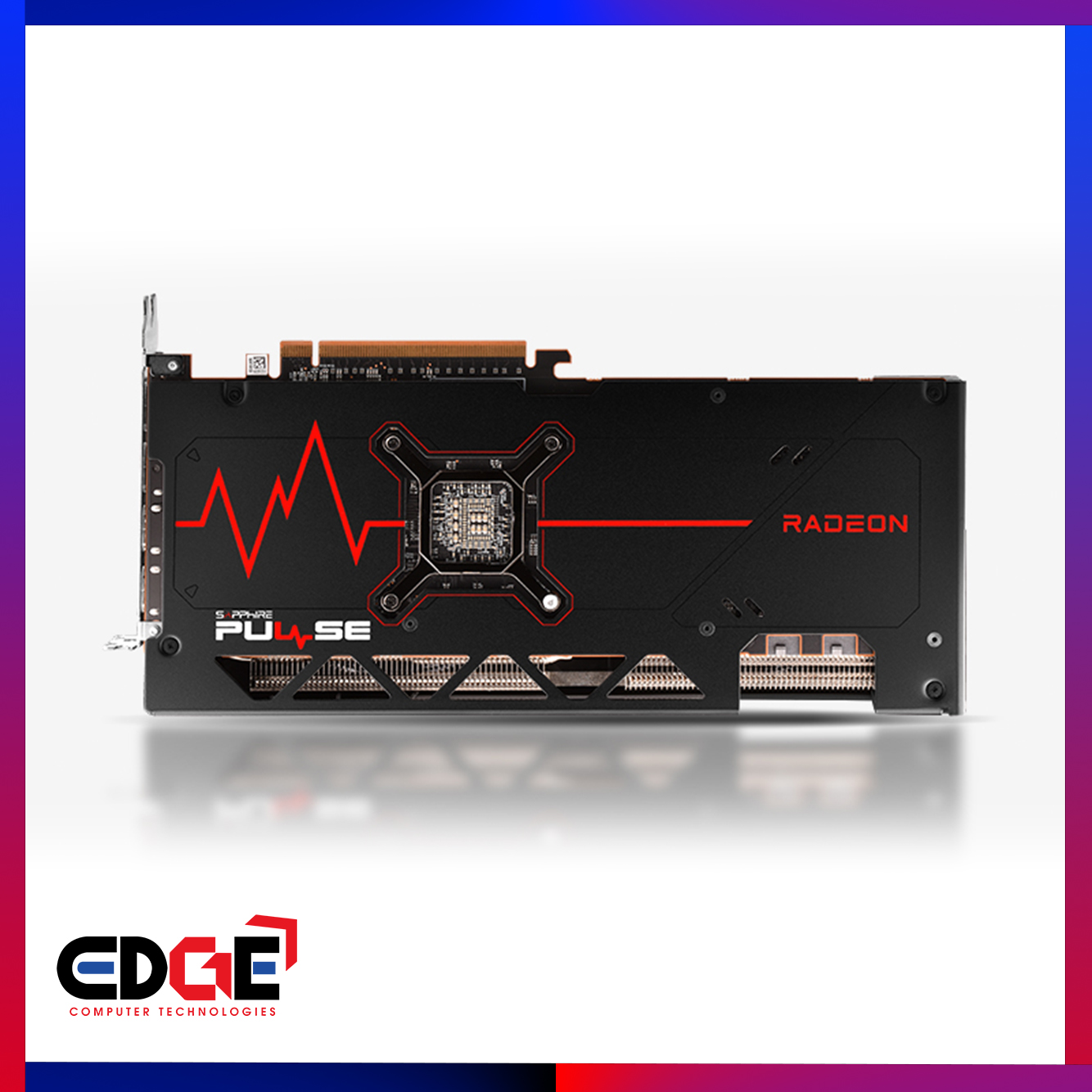
Description
SPECIFICATIONS
| GPU | AMD Radeon™ RX 7700 XT Graphics Card 5nm GPU AMD RDNA™ 3 Architecture |
| Engine Clock |
|
| Stream Processors | 3456 |
| Compute Units | 54 CU (with RT+AI Accelerators) |
| Infinity Cache | 48MB |
| Ray Accelerators | 54 |
| Memory Size/Bus | 12GB/192 bit GDDR6 |
| Memory Clock | 18 Gbps Effective |
| Displays | Maximum 4 Displays |
| Resolution |
|
| Interface | PCI-Express 4.0 x16 |
| Output |
|
| BIOS Support | UEFI |
| Game Index | 1440P |
| Sapphire Features |
|
| AMD Features |
|
| Cooler Type | 2 Fans |
| Form Factor | 2 slot, ATX Dimension: 280(L)X 128.75(W)X 52.57 (H)mm |
| Power Consumption | 230W Total Board Power |
| OS | Linux®, Windows® 10, and Windows 11. 64-bit operating system required |
| System Requirement |
|
*Boost Clock is the maximum frequency achievable on the GPU running bursty workload. Boost clock achievability, frequency, and sustainabilty will vary based on several factors, including but not limited to: thermal conditions and variation in application and workloads.
*Game Clock is the expected GPU clock when running typical gaming applications, set to typical TGP(Total Graphics Power). Actual individual game clock results may vary.


Reviews
There are no reviews yet.